Smithers, BC Community Profile
by Chris Lawrence
Smithers is a small northern BC town located in the Bulkley Valley, with the Hudson Bay Mountain range on one side and the Babine Mountains on the other. While the population of the Town itself is only a little over 5,000, Smithers acts as a service and work hub for much of the surrounding region, supporting a regional population closer to 15,000.
The town has a strong outdoor focus, which is a big draw for people who choose to live and work here. Hudson Bay Mountain Resort is 25 minutes from downtown and offers alpine skiing, touring, and backcountry access that’s well known across the province. In the fall and winter, the Bulkley River and nearby systems attract anglers from all over for what’s considered world‑class steelhead fishing. In the summer months, the same mountains and rivers turn into hiking, biking, camping, and boating territory. For operators and tradespeople, it’s the kind of place where work and lifestyle balance actually exists.
Economically, Smithers is still very much a resource‑based community. Forestry remains a major employer through the local sawmill, and the town also serves as a base for mining and mineral exploration activity throughout northwest BC. Add in government services, healthcare, transportation, retail, and tourism, and you end up with a steady year‑round workforce that puts consistent demand on municipal infrastructure.
That infrastructure includes the Town’s Wastewater Treatment Plant, which treats wastewater from the Town of Smithers before discharging to the Bulkley River. Given how important the river is—both environmentally and economically—plant performance matters, especially during higher flow periods and seasonal changes.
 The Smithers WWTP is a lagoon‑based system, typical of many small and mid‑sized northern communities. While the process itself is straightforward, keeping it running well requires regular attention to screening, aeration, and solids management. Aging equipment, higher seasonal flows, and lagoon sludge buildup have created challenges in recent years, and like many lagoon plants, staying within permit limits can become harder as capacity is reached.
Smithers WWTP Profile
The following plant profile outlines how the Smithers WWTP is operated day‑to‑day, what challenges were encountered in 2025, and where the system is headed next. With major upgrades planned—including improved aeration and lagoon desludging—the plant is entering an important transition period aimed at improving long‑term reliability for operators and protecting one of the Bulkley Valley’s most valued resources.
The Town of Smithers operates a lagoon‑based wastewater treatment plant serving approximately 2,400 residential connections and 375 commercial properties. Wastewater is conveyed to the Rosenthal Road WWTP through about 68 km of sanitary sewer main and three lift stations located throughout the community.
Treatment Process
Treatment at the Smithers WWTP consists of screening followed by two aerated lagoons in series, with final discharge to the Bulkley River.
Influent first passes through a Parkson screen/press, removing rags, wipes, grease, and debris greater than 6 mm. Screenings are compacted, bagged, and hauled to landfill. Keeping the screen operating well is critical—poor screening quickly shows up in lagoon performance.
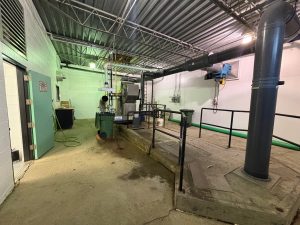 Following screening, wastewater flows into two aerated lagoon cells with an overall retention time of approximately 21 days. The system uses twelve 10‑hp surface aerators, with eight units in the primary lagoon and four in the secondary lagoon. Treated effluent is discharged through a 450‑mm diffused outfall to the Bulkley River.
Flows and Performance
In 2025, the plant treated approximately 805,000 m³ of influent and discharged 530,000 m³ of effluent. The facility operates under Pollution Control Permit, with effluent limits of 45 mg/L BOD and 60 mg/L TSS, and a maximum daily discharge of 10,800 m³/day.
Several months in 2025 exceeded permitted BOD and TSS limits. Elevated lagoon solids and aging aeration equipment were the primary contributors to these results, especially during higher flow periods.
Operations & Maintenance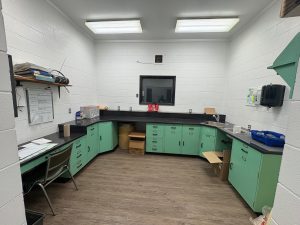
Operational focus throughout the year included:
- Maintaining reliable screen/press operation
- Monitoring aerator condition and performance, including extensive maintenance
- Scheduled sewer main flushing, targeting flat‑grade and grease‑prone areas
An annual aerator rebuild program continued in 2025 to reduce failures and help improve effluent quality.
Looking Ahead
The Town of Smithers has secured federal funding for significant WWTP upgrades planned for 2026. Current design work includes:
- Upgraded lagoon aeration
- SCADA integration
- Lagoon desludging
These upgrades are expected to improve treatment reliability, reduce compliance risk, and make the system more manageable for operators.