The District of Port Hardy’s Water Treatment Plant
by Joe Jewell, CWP, CWWP
Nestled at the northern tip of Vancouver Island, the District of Port Hardy, British Columbia, is a community defined by its pristine natural beauty, rugged coastline, and close connection to the land and sea.

Port Hardy water treatment facility
Serving a population of approximately 5,000, the District of Port Hardy’s water treatment plant is essential not just for the town itself, but also for the neighbouring Kwakiutl and the Gwa’Sala-Nakwaxda’xw First Nations.
But the reach of the Port Hardy Water Treatment Plant extends well beyond serving homes and businesses. The plant also supplies essential water to the ferries that connect Port Hardy to the wider province, to bustling fish processing plants—each critical to the local economy. In a place where “the highway ends, and the adventure begins,” the water plant supports both community well-being and the spirit of exploration that defines this northern gateway.
This facility, often unseen by residents and visitors alike, plays a crucial role in ensuring that the district’s most fundamental resource—clean, safe drinking water flows reliably.
By the late 1990s, it became clear that the aging water infrastructure required a comprehensive upgrade. The existing level of treatment was becoming inadequate for the community’s needs and for compliance with evolving health regulations. After careful planning and design, the District of Port Hardy commissioned the water treatment plant in May 2000. The plant was designed by BCA (now AWC), and the District entered a public-private partnership with EPCOR Water Services. With a maximum flow capacity of 10 ML/day but typically operating at around 4.4 ML/day, the plant delivers safe, high-quality, water to every home and business in the District of Port Hardy.
How the Plant Works: From Source to Tap
Water is supplied by the Tsulquate River, which is fed by Kains Lake. The lake and river are distinctly tea-coloured; a hallmark of many west coast communities which presents many unique considerations for treatment.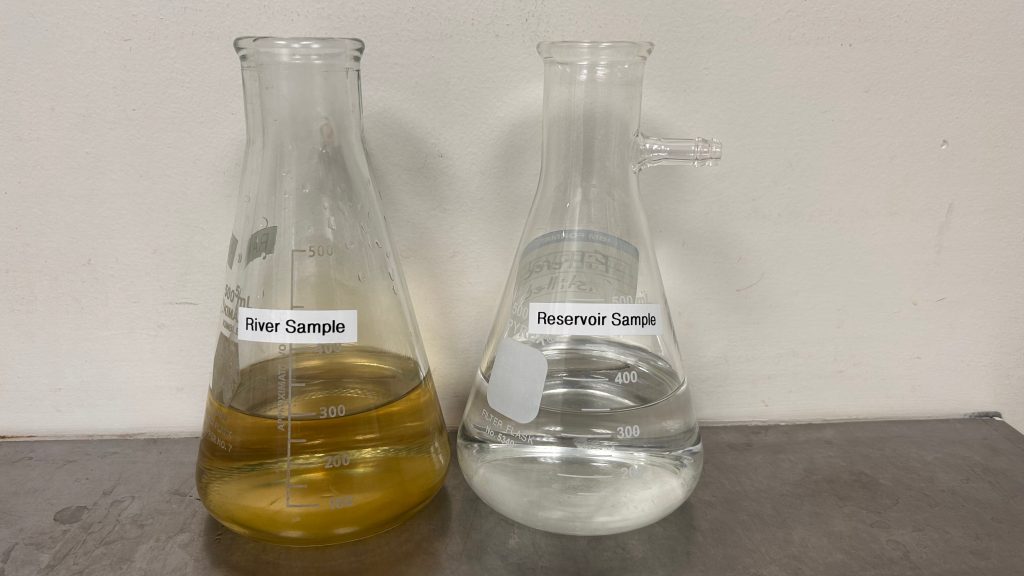
One of the most striking characteristics of Port Hardy’s raw water is its deep, amber hue. The annual average colour measures around 70 TCU (True Colour Units), but at times it can surge to highs of 200 TCU or drop to the low 30s, reflecting the river’s response to seasonal changes and weather events. Such pronounced colour not only signals a rich presence of natural organics but also poses unique challenges for treatment and distribution.
The treatment process begins with the addition of ISOPAC 6, as a coagulant, and soda ash for alkalinity and pH adjustment to the raw water.
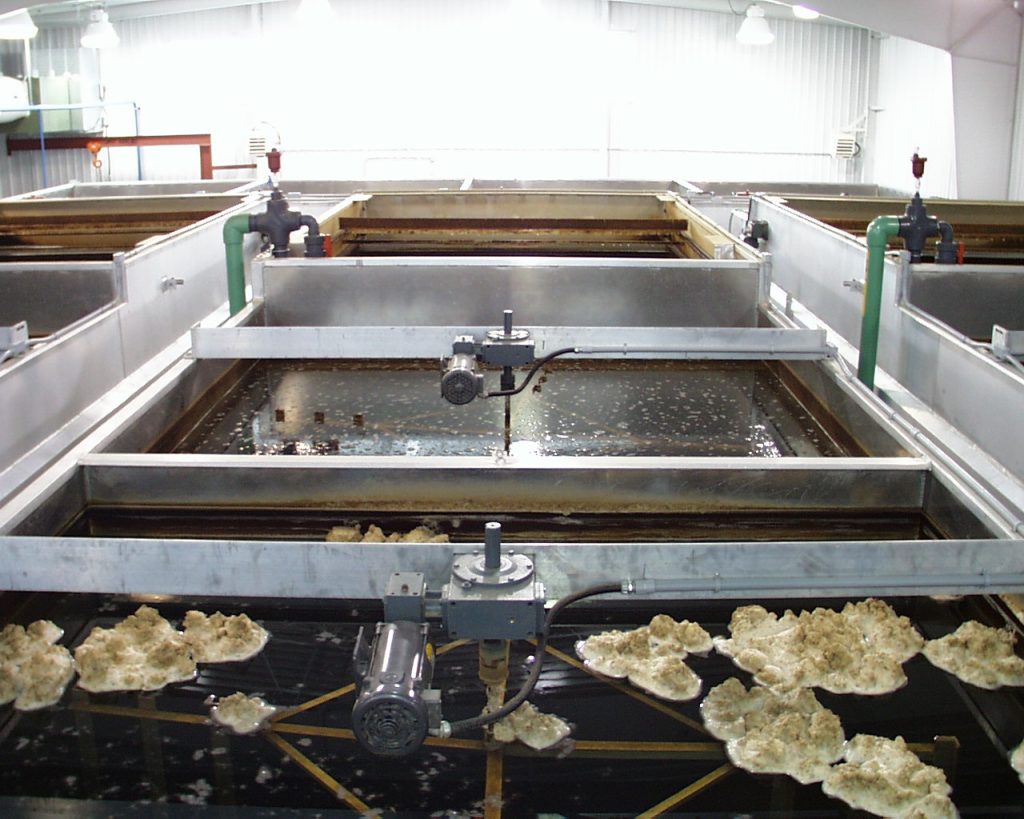
Once coagulation is complete, the water flows into the Dissolved Air Flotation (DAF) system. Here, microbubbles adhere to the flocs, lifting them to the surface where they can be efficiently skimmed away. This has shown to be particularly effective for the removal of the river’s characteristic organic colour and turbidity.
 The clarified water then passes through dual media filters, composed of silica sand and anthracite coal.
Post filtration, alkalinity is increased using lime. To fine-tune the final pH, carbon dioxide is introduced, lowering the pH to its ideal level for both safety and palatability.
Water is disinfected using a sodium hypochlorite generator. This process replaced the use of chlorine gas cylinders in the early 2010s.
Daily operations, including laboratory testing, system oversight, and maintenance, are carried out by a single skilled operator. The plant is classified as a Level III with the EOCP.
Commitment to Environmental Sustainability
Port Hardy’s water treatment plant is designed with sustainability in mind. DAF treatment operates efficiently, minimizing energy and chemical use while maximizing water recovery. Unlike conventional flocculation methods that rely on forming large, settleable flocs, the DAF process produces a much smaller “pin floc.” ideal for flotation
Backwash wastewater and residuals are pumped to the Tsulquate Wastewater Treatment Plant for treatment, safeguarding local waterways and ecosystems.
Water restrictions are a key component to effective water conservation. Implementing water restrictions not only supports the ongoing efforts of the Utilities Department to maintain a reliable water supply but also fosters a culture of stewardship across the community.
Emergency Preparedness and Resilience
No water system is immune to emergencies. The Port Hardy Water Treatment Plant is equipped with a 600 Kw diesel generator capable of powering the entire site, ensuring continuous operation even during power outages.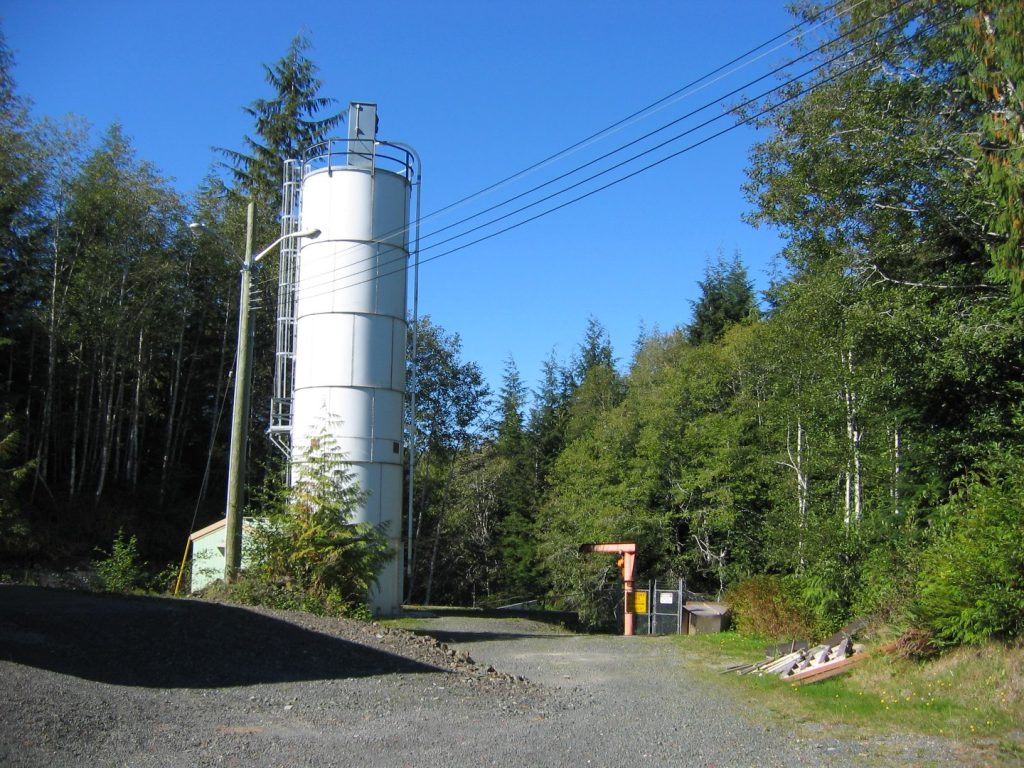
Plant operators utilize a full SCADA system, providing comprehensive, real-time monitoring and remote accessibility. Water quality parameters—including turbidity, pH, chlorine residual, and high reservoir discharge flow rates are continuously monitored and trended.
In recent years, the District has made substantial investments in water storage infrastructure to enhance both emergency preparedness and fire flow capacity. In 2018, the addition of the Fort Rupert Reservoir brought an extra 2 million litres (ML) of reserve, while Reservoir #1 underwent a significant upgrade, increasing its storage from 2 ML to 2.7 ML. In 2025, Reservoir #2 upgraded to match the 2.7 ML capacity of Reservoir #1. Bear Cove Reservoir adds a further 1 ML to the network. These improvements bolster the district’s ability to respond to fire and the community’s demands.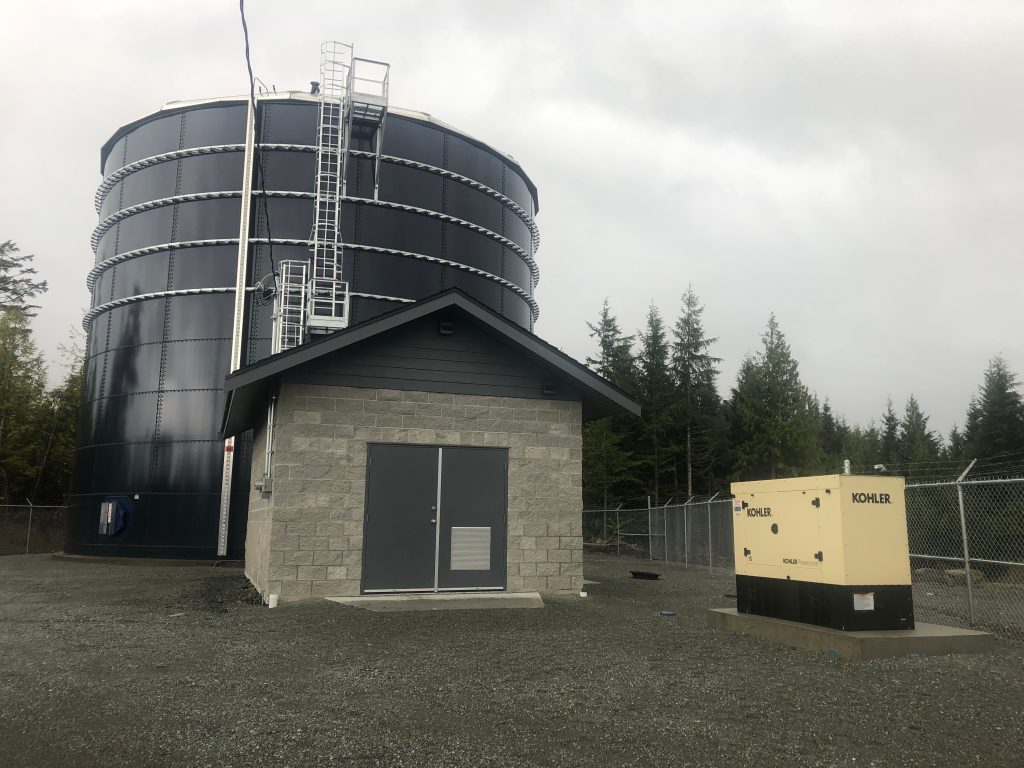
Investments are currently being made to track water patterns and demands. Water meters have been installed in 3 of 4 water reservoirs and soon all of the District’s 7 PRV stations will have water meters installed with remote monitoring and alarms for high flow.
Clean water is one of the most critical components of daily life, yet it is so easily taken for granted. In Port Hardy, the constant vigilance of the District’s Utilities Department behind the scenes maintains the safe, reliable flow of water for those who call this corner of Vancouver Island home.