Operators at the Heart of Malahat Nation’s Community Infrastructure
This article was prepared with the collaboration and support of the following contributors:
- Lambert Harry CWP, CWWP – Operation and Maintenance Coordinator and Lead Water and Wastewater Operator, Malahat Nation
- Donald Harry CWP – Assistant Operations and Maintenance Coordinator and Water Operator, Malahat Nation
- Anna Agnew CWP, CWWP, Circuit Rider – Jameson Water Service
- Shannon Ralfs – Executive Director of Infrastructure and Capital Projects, Malahat Nation
 The Community
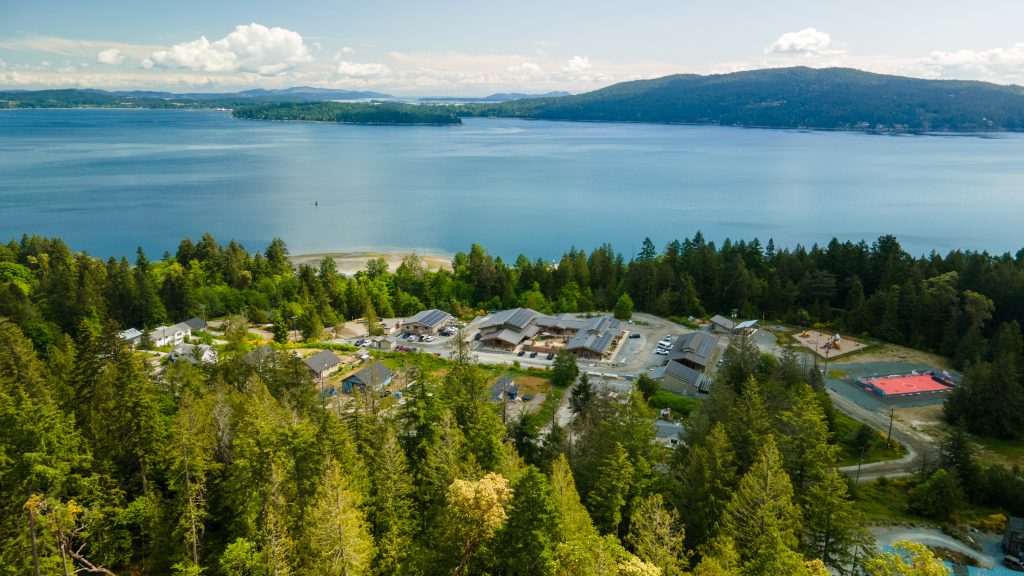
Malahat Nation is located south of Mill Bay, along the western shores of Saanich Inlet, approximately 40 kilometres northwest of Victoria, BC. The traditional languages spoken in Malahat are SENĆOŦEN, Hul’q’umi’num’ and Samish. Nation members have family ties with the WSÁNEĆ Peoples of the Saanich Peninsula and with members of the modern Hul’q’umi’num Treaty Group as well as many ties to the nations across the border in Washington State. The name MÁLEXEŁ is derived from words meaning “caterpillars” in SENĆOŦEN—believed to reference a historical caterpillar event in the area.
Malahat ancestors were among the Indigenous peoples who encountered Europeans in the late 1700s. Like many Coast Salish nations, they suffered dramatic population losses from introduced diseases such as smallpox and experienced significant disruption to their way of life. In the mid-19th century, Malahat leaders were signatories to the Douglas Treaties (1850–1854), agreements between Indigenous communities and the colonial government of Vancouver Island that were intended to allow settlers access to land while preserving Indigenous hunting and fishing rights—though the impact of these treaties has been the subject of ongoing discussion and legal interpretation.
In recent decades, the Malahat Nation has focused on economic development and land reclamation. In 2015–2017, the Nation significantly expanded its land base through purchases—including the large former Bamberton industrial site—tripling its holdings. These acquisitions provide space for housing, job creation, resource projects, and tourism development.
Malahat Nation is active in the BC treaty process, seeking modern agreements that recognize rights, title, and governance, as a part of the Te’mexw Treaty Association. The Nation’s strategic planning “Comprehensive Community Plan” guides long-term development, cultural revitalization, and community wellness.
Today the Malahat Nation is undertaking major infrastructure investments, including a transformational water and wastewater system upgrades that will support housing, economic growth, emergency preparedness, and environmental protection around Saanich Inlet. This project is financed in part through Indigenous Services Canada and in part from a significant loan from the Canada Infrastructure Bank – reflecting the Nation’s ongoing commitment to sustainable community development and environmental stewardship.
The Operators
Malahat Nation community infrastructure consists of a water treatment plant, a water distribution system, a wastewater collection system and wastewater to ground disposal. None of these could be possible without a dedicated team of EOCP Operators! Lambert Harry, CWP, CWWP, and Donald Harry, CWP, are the most critical component to keep the Malahat water and wastewater systems operating in its peak performance!
Lambert and Donald are dedicated to ensuring their community has potable and palatable water and a properly maintained wastewater collection system.

Malahat Nation has 369 people, with only 170 residing in the Malahat Nation community. The water and wastewater facilities are EOCP classified as a small water system and small wastewater system.
Malahat community small water system is a groundwater source from bedrock aquifer underlying Malahat reserve lands (Provincial Aquifer #208). There are two groundwater extraction wells. The groundwater is chlorinated with 12% sodium hypochlorite and stored in a 300 m3 above ground reservoir. The chlorination dosage is controlled using an oxidation-reduction potential (ORP) meter.
Lambert and Donald maintain a free chlorine residual of ~0.35mg/L. They diligently monitor the system every day, and they sample for micro bacteriological parameters every week!
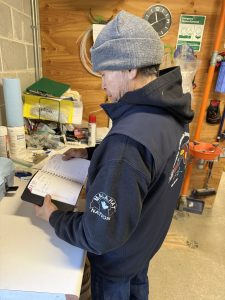
Seyoum Gebeyehu, Environmental Health Officer with FNHA’s Environmental Public Health Services supports Malahat Nation and works with Lambert Harry and Donald Harry:
“Lambert and Donald deeply care about the quality of drinking water supplied to members of the Nation. They listen to concerns that members of the Nation may have regarding the quality of drinking water and offer assurance that water is being regularly tested and safe to use.
Lambert and Donald have been consistently submitting water samples for bacteriological analysis above and beyond what is required. Their ability to go above and beyond to ensure the safety of Malahat Nation’s drinking water system has been outstanding.
Lambert and Donald both communicate effectively with their Environmental Health Officer and Circuit Riders when they experience operational challenges and seek advice.”

Due to the aging infrastructure and capacity limits, restricting ability to support additional housing and economic development Malahat Nation is building new, modern water and wastewater facilities to replace aging infrastructure and support future growth!
The Future
A major water treatment plant upgrade is underway to provide reliable, safe potable water for the community and to support new housing and economic development. The existing plant is around 33 years old and had reached capacity.
Construction includes modern treatment facilities and expanded storage to improve water quality, safety, and capacity — including fire suppression flows and emergency reserves. The project is being funded largely through a $57.6 million loan from the Canada Infrastructure Bank (CIB) in partnership with Indigenous Services Canada, who contributed $15.7 million to the project, Malahat Nation and the newly formed Malahat Utility Inc, who will own and operate the new system, with Lambert and Donald at their side.
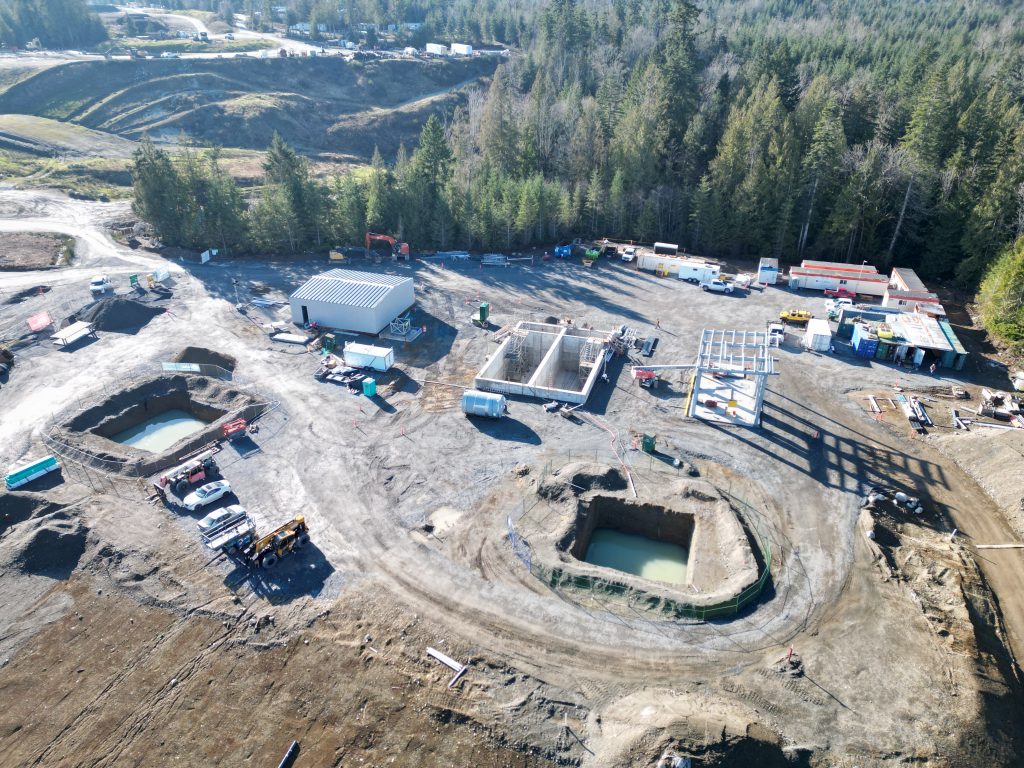
Shannon Ralfs, Executive Director of Infrastructure and Capital Projects, is overseeing the construction of the new system:
“Operational Improvements are upgrading from the older system to a modern treatment to allow more robust disinfection, storage, monitoring, and distribution that align with regulatory and public health expectations.
The opportunity for Malahat Nation to expand the system to serve not only the growth in community but also have access to the resources and infrastructure that supports new development has created a really exciting era for the nation.
Without having had the ability to build any new homes in community since 2019, due to the current system being at capacity, knowing that this project will support this and future generations of MÁLEXEŁ mustimuhw (people) to come home, and development will allow a thriving community that can live, work and play all in the safety of their home community.”
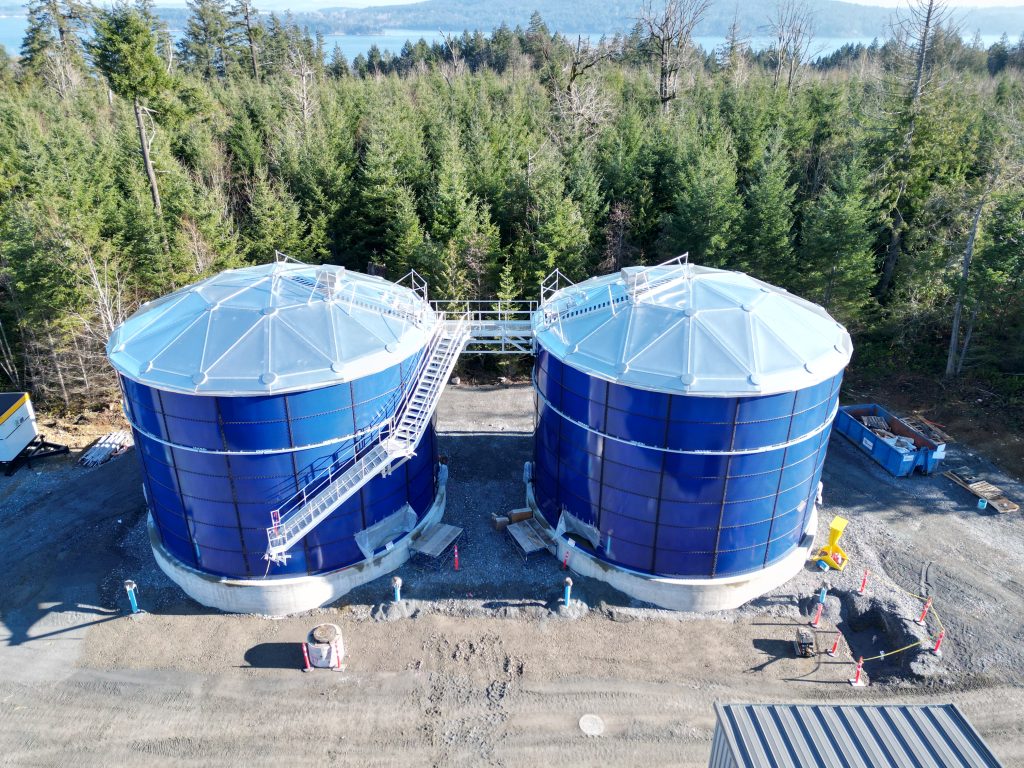
While final system design details are part of the ongoing construction and commissioning phases, the emphasis is on delivering clean, reliable potable water and expanded capacity that meets growing community needs. This is important for Malahat Nation not only for water quality but also for community potential; this will enable housing construction and economic initiatives on reserve lands and most importantly improve fire flow capacities and emergency water reserves.
The upgrades system Malahat Nation is currently building:
- Construction of a new, modern water treatment facility
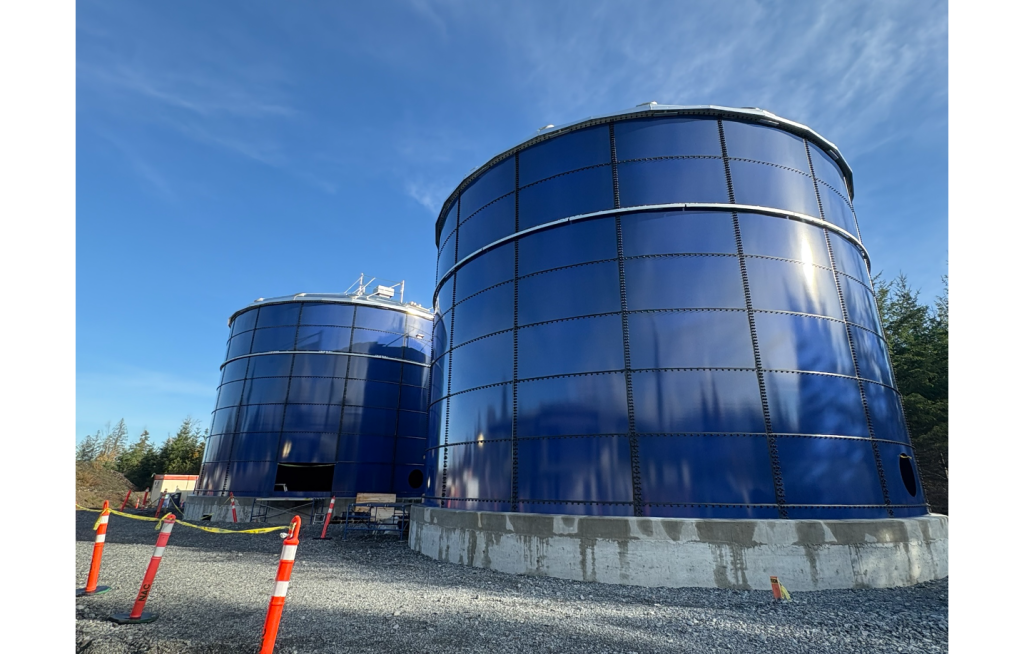
- Expanded storage capacity, with 2 new 1,000 m3 storage capacity each
- Improved system reliability, monitoring, and redundancy
- Designed to support future community growth and fire flow requirements
- System operations align with B.C. drinking water standards and First Nations community infrastructure guidelines
- Upgrades are intended to enhance compliance, operational resilience, and long-term sustainability
Malahat Nation Wastewater System is a gravity collection system with two sewer two sewer lift stations pumping to a distribution tank and ground disposal. The collection system is from residential homes and community facilities within Malahat reserve lands.
Aging collection infrastructure with limited capacity for additional connections is why an upgrade is required. The upgraded wastewater treatment system will include:
- Secondary treatment designed to meet regulatory effluent quality requirements via an SBR
- Preliminary screening
- Biological treatment
- Residuals management
- Clarification
- Disinfection prior to discharge
The effluent discharge will be to ground on Malahat Nation reserve through a rapid infiltration basin system, with a minimum of Class C effluent prior to discharge to ground. This element of the project is currently under final design with the team.
Capacity constraints limiting housing growth and economic development, construction of a new, modern wastewater treatment facility will:
- Increase hydraulic and organic treatment capacity
- Enhanced treatment performance and process reliability
- Improve resilience to peak flows and climate-related events
From a regulatory point of view, it will be designed to meet or exceed applicable federal and provincial wastewater effluent standards, including protection of receiving ground waters. It will support long-term compliance, environmental stewardship, and operational sustainability.

Effluent monitoring will require routine sampling to confirm compliance with permit limits for pathogens, suspended solids, and biochemical oxygen demand (BOD) to protect the in ground discharge, requiring careful operational control to protect sensitive coastal ecosystems.
The sludge handling process will stabilize residuals removed from site and transported off-site for further treatment or disposal. Operator responsibilities will be sludge volume tracking, coordination with hauling and disposal contractors and as always record keeping to meet regulatory requirements for due diligence!
Power, controls and monitoring will be backed up with Standby power capability planned as part of system upgrades to maintain treatment during outages. Supervisory Control and Data Acquisition (SCADA) and telemetry systems to allow real-time monitoring of key process parameters, Alarm notification for pump failures, high levels, and system faults will require Lambert and Donald to be on standby.
The future targets of the new wastewater treatment facility will allow:
- increased hydraulic and organic capacity
- Improved process reliability and redundancy
- Enhanced operator safety, access, and maintenance features
- Designed to accommodate future housing growth and climate resilience
- Regulatory & Operational requirements will be in accordance with applicable federal and provincial wastewater regulations
Emphasis on operator training, certification, and preventive maintenance to support long-term compliance and environmental is of utmost importance.